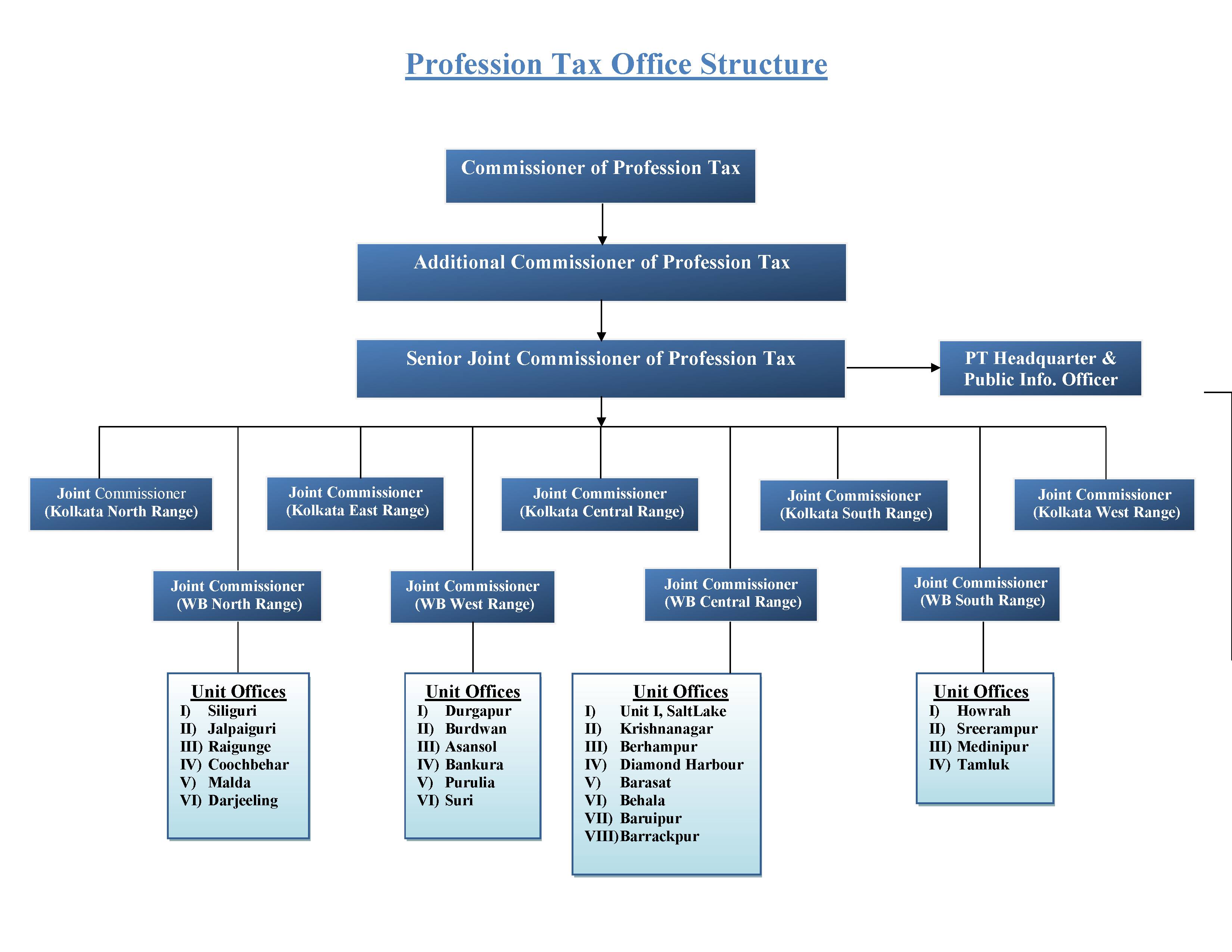
In West Bengal Profession tax is administered by the Directorate of Commercial Taxes under Finance (Revenue) Department under the provisions of the West Bengal State Tax on Professions, Trades, Callings and Employments Act, 1979 and the rules framed there-under.
Professional Tax is a tax levied by state governments on individuals or entities engaged in
professions, trades, or employments. This tax is applicable to both salaried employees and
professionals like doctors, lawyers, and consultants. Although it is a state-level tax, the
structure and rate of the tax can vary from state to state.
While it is not as widely discussed as Income Tax, P Tax is mandatory for those working in
professions or employment in states where professional tax is levied.
Let’s dive deeper into the various aspects of professional tax payment.
Who Needs to Pay?
In India, professional tax applies to individuals earning income through employment or
profession in states where professional tax laws are applicable. This includes:
Salaried individuals: Employees working in both government and private sectors.
Salaried individuals: Employees working in both government and private sectors.
Professionals: Individuals engaged in professions like doctors, lawyers, architects, chartered accountants, etc.
Business owners: Entrepreneurs and self-employed individuals are also required to pay professional tax in many states.
However, not everyone is required to pay. Professional Tax is not applicable to individuals
earning below a certain threshold. The exact exemption limit varies across states.
The calculation of professional tax depends on the individual’s income. Each state has its
own rules for calculating professional tax, but generally, the tax is based on income slabs.
The professional tax amount varies by state and income slab, but it is capped at a maximum
of ₹2,500 per year.
For salaried individuals, professional tax is typically deducted by the employer and paid
directly to the government. Self-employed individuals or business owners need to make the
payment themselves.
Illustrative example (varies by state):
Income less than ₹10,000: No tax
Income between ₹10,000 to ₹15,000: ₹250 – ₹500
Income above ₹15,000: ₹1,000 and above
The above is only an illustrative example. Actual professional tax slabs and rates vary from
state to state.
Professional tax is usually paid monthly, with the deduction being made directly from yoursalary if you're a salaried employee. For self-employed individuals, the payment frequencymay vary from state to state and can be done monthly, quarterly, or annually.
The payment is typically made by the employer to the state government, while self-employed individuals can make the payment online via the state government’s official portal or at the tax office.
Tax Deductions: The amount paid as professional tax is deductible under Section 16 of the Income Tax Act.
Compliance with Legal Obligations: Paying professional tax ensures compliance with state laws and helps avoid
penalties.
Contribution to State Services: Revenue contributes to state-level development such as infrastructure, education, and
healthcare.
Employment-related Benefits: Supports administrative and public services within the state.
Income Tax: A central government tax applicable across India.
Professional Tax: A state-level tax based on profession or employment.
Income Tax: Applies based on overall taxable income.
Professional Tax: Applies based on employment/profession thresholds set by states.
Income Tax: Progressive slabs.
Professional Tax: Fixed slabs with state-wise variation.
Income Tax: Paid to the central government via TDS or self-assessment.
Professional Tax: Paid to the state government via employer deduction or direct payment.
“Professional tax is the same as income tax”: They are separate taxes with different purposes and jurisdictions.
“Only employees need to pay professional tax”: Self-employed individuals are also liable.
“Professional tax is not deductible”: It is deductible under Section 16.
“Professional tax isn’t mandatory”: It is mandatory where applicable, with penalties for non-payment.
Professional Tax is an important part of your financial obligations, whether you are employed
or self-employed. Understanding P Tax payment, who needs to pay, how it's calculated, and
the benefits it offers can help you stay compliant with the law and even reduce your income
tax liability.
Be sure to check with your state tax department for the specific rules and payment schedules
applicable in your state.
In-house payroll management often leads to complexity and compliance challenges. The Marshal provides expert payroll solutions designed to streamline processes, maintain accuracy, and ensure complete regulatory compliance.
09:00 Am - 6:00 Pm
© 2024 Created with Royal Elementor Addons